
By Agustín Moya-Colorado, Member of the Board of Directors, PM² Alliance
(This article is part of the SPM² Project, co-funded by the Erasmus+ Programme of the European Union.)
Over the years, I have often encountered projects that were considered successful at the moment of closure. The planned activities had been completed, the deliverables had been produced, the budget had been spent as foreseen, and the final reports had been approved. By conventional project management standards, these projects had achieved what they set out to do.
Yet when revisiting some of these projects, months or years later, a different picture sometimes emerged. Training programmes were no longer being delivered. Platforms developed with considerable effort had few active users. Procedures that had once been enthusiastically introduced had gradually disappeared from everyday use. The project had delivered what it promised, but the expected impact had not materialised or had simply faded away over time.
Experiences like these raise an important question: if projects are ultimately intended to create positive and lasting change, why do some of them struggle to generate sustainable impact despite successfully delivering their outputs?
The answer, I believe, lies in a distinction that is often overlooked. Deliverables, however well designed, do not create impact on their own. Sustainable impact emerges when people adopt those deliverables, integrate them into their daily activities, and continue to derive value from them long after the project itself has ended. It is the people dimension that is key to sustainability.
When discussing sustainable project management, we often focus on environmental considerations, resource efficiency, or the long-term viability of project results. These dimensions are undoubtedly important. However, sustainability also has a profoundly human dimension. The sustainability of project outcomes depends not only on what a project delivers, but on the extent to which people are willing and able to use, maintain, improve and champion those results over time.
This is one of the reasons why the SPM² tailored methodology places such strong emphasis on outcomes, benefits, stakeholder engagement and business implementation. SPM² recognises that project success cannot be measured solely by the production of outputs. A project may produce a new system, a training curriculum, a methodology, a policy framework or a set of recommendations, but the real value of these deliverables only becomes visible when they contribute to meaningful changes in behaviour, organisational performance or societal outcomes.
The logical links between outputs, outcomes and benefits (expected causality) is therefore central to understanding sustainable impact. Outputs are produced by projects. Outcomes emerge when stakeholders begin to use those outputs. Benefits arise when those outcomes create value for organisations, communities or society at large. While project teams can directly control the delivery of outputs, outcomes and benefits depend largely on factors that lie beyond the immediate control of the project itself. They depend on people.
This is why stakeholder engagement should not be viewed as a supporting activity that accompanies project implementation. It should be recognised as a strategic condition for sustainability. The likelihood that project results will endure often depends on whether the people who are expected to use them have been meaningfully involved throughout the project lifecycle.
Too often, stakeholders are approached primarily as sources of information, participants in consultation exercises, or recipients of project outputs. While these roles are important, they may not be sufficient to ensure long-term impact. Sustainable projects require something deeper. They require stakeholders to become active contributors to the process of change itself.
When business representatives, users, beneficiaries and affected individuals or groups participate in defining problems, shaping solutions and validating key decisions, they contribute much more than technical input. They contribute experience, legitimacy and commitment. They help ensure that project outputs respond to real needs and fit real contexts. Most importantly, they develop a sense of connection to the changes that the project seeks to achieve.
This perspective aligns closely with one of the core ideas behind the SPM² Project. Sustainability is not something that can be added at the end of a project through a checklist or a final assessment. It needs to be considered from the very beginning and integrated throughout the entire project lifecycle. In practice, this means designing projects in ways that encourage participation, foster ownership of outcomes, and strengthen the capacity of stakeholders to sustain benefits beyond project closure.
One of the most thought-provoking Infrequently Asked Questions in PM² asks: “Is there life after the project?” From a sustainability perspective, this question is particularly significant. The answer depends not only on the quality of the deliverables produced, but also on the relationships, capabilities and commitment that have been built throughout the project journey. In many respects, the foundations of post-project sustainability are laid long before the final deliverable is completed.
Ultimately, sustainable impact is less about what projects produce and more about what people do with what projects produce. Deliverables matter. They are necessary vehicles of change. However, they are not the change itself. The real transformation occurs when individuals, organisations and communities embrace project results and make them part of their own reality.
Perhaps this is why sustainable project management is fundamentally a human endeavour. Projects may initiate change, but it is people who sustain it. And when people become active participants in shaping, adopting and advancing project outcomes, the conditions for lasting impact are finally in place.
About the Author
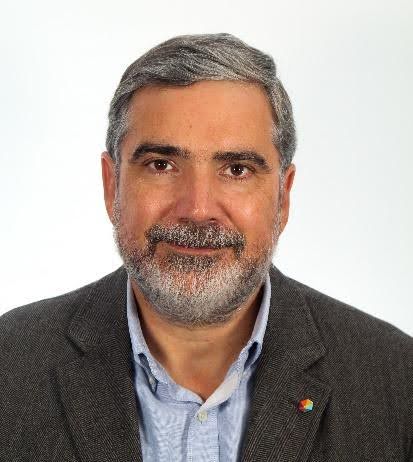
Agustín Moya Colorado is a member of the Board of Directors of the PM² Alliance, contributing to the advancement of sustainable and effective project management practices across Europe.
He is an agricultural engineer by training with post-graduate studies in Project Cycle Management in Development Cooperation and certifications in PM² by the European Commission and the PM²Alliance. In his over 20 years of professional experience, he has worked with civil society organizations, public administrations (mainly the EC), and private companies; in numerous projects in different contexts and countries. This blend of experience allows him to understand the perspectives, needs and constraints of the different stakeholders in designing, planning and implementing projects.
(This article was written within the framework of the SPM² Project, co-funded by the Erasmus+ Programme of the European Union.)