SPM² Newsletter #2: The VET Pilots
In September we finally got to do the part of the project many of us had been looking forward to most: putting the SPM² approach in front of real participants and seeing how it holds up in practice.
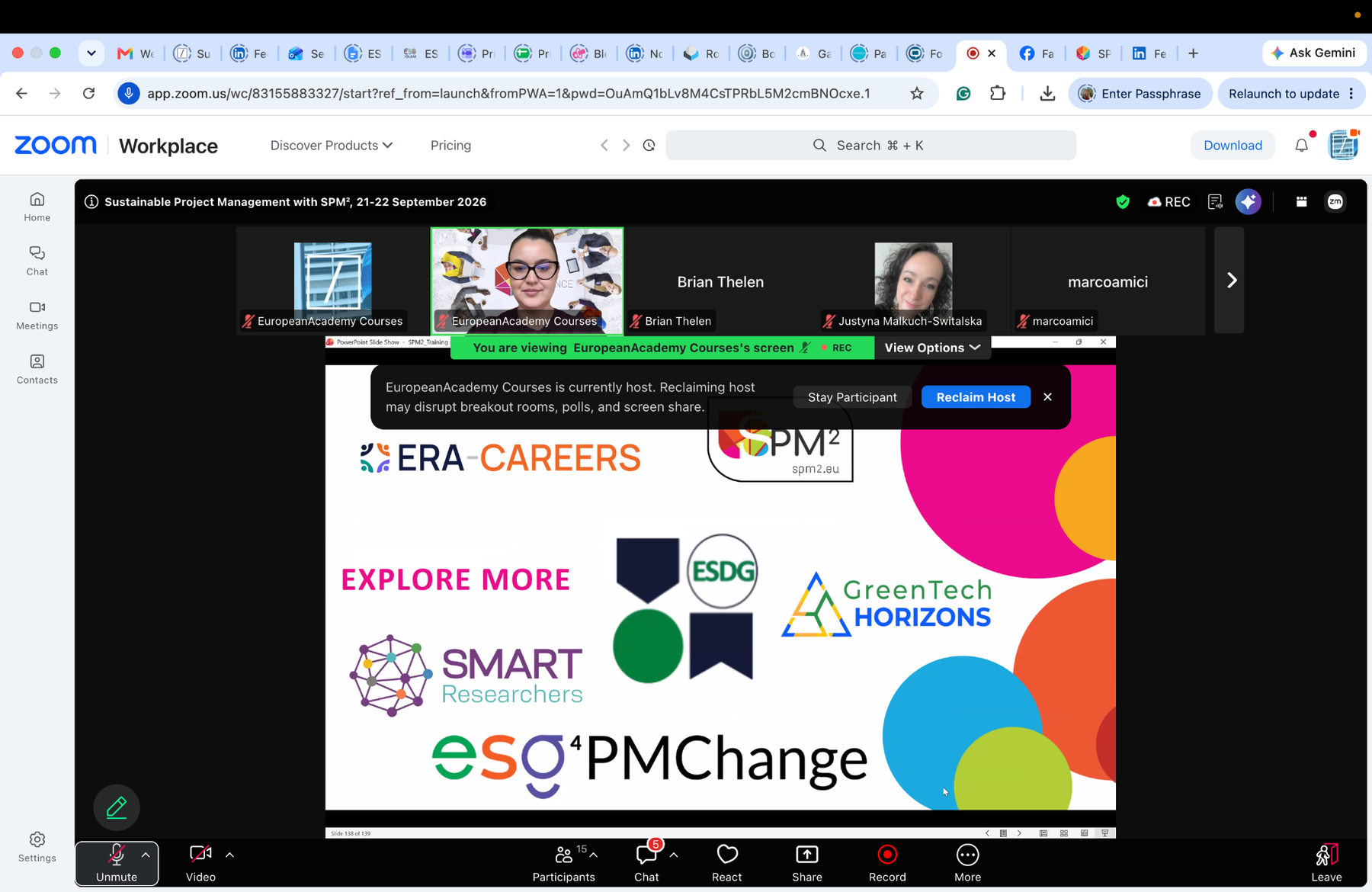
We ran three pilot trainings, on 14–15, 21–22 and 25–26 September. European Academy organised them together with Advise Institute and the University of Novi Sad. The pilots were delivered online and brought together dozens of project managers, public servants, consultants and educators from different countries. Some had years of PM² experience behind them, and a few were just starting out in project management. That mix made for some very good discussions.
Our trainers, Marijana Topo and Milena Savković, guided the participants through both days of every pilot. They were supported by the SPM² project coordinator, Dr Danijela Ćirić Lalić from the Faculty of Technical Sciences, University of Novi Sad.
Two days, one project
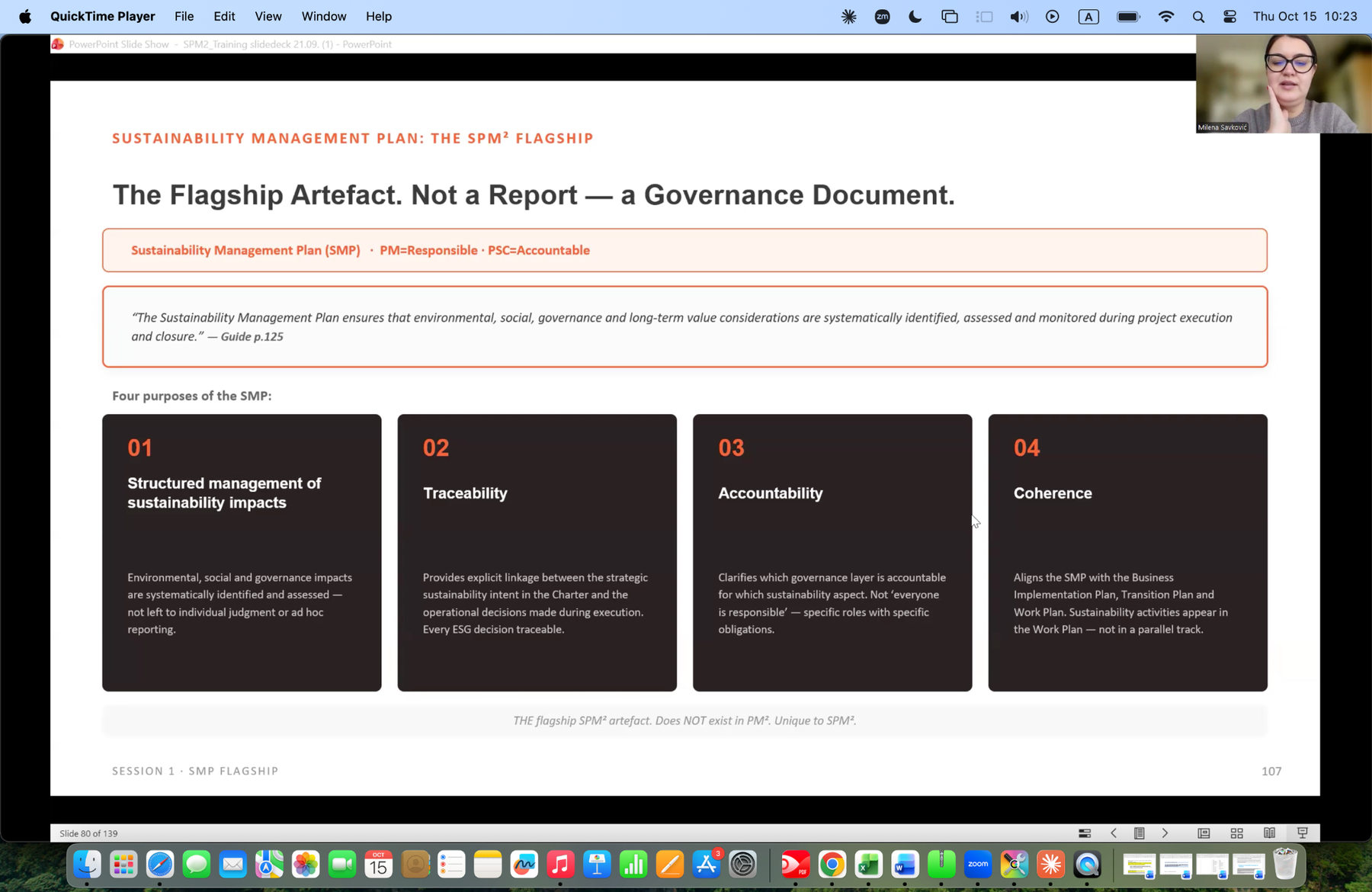
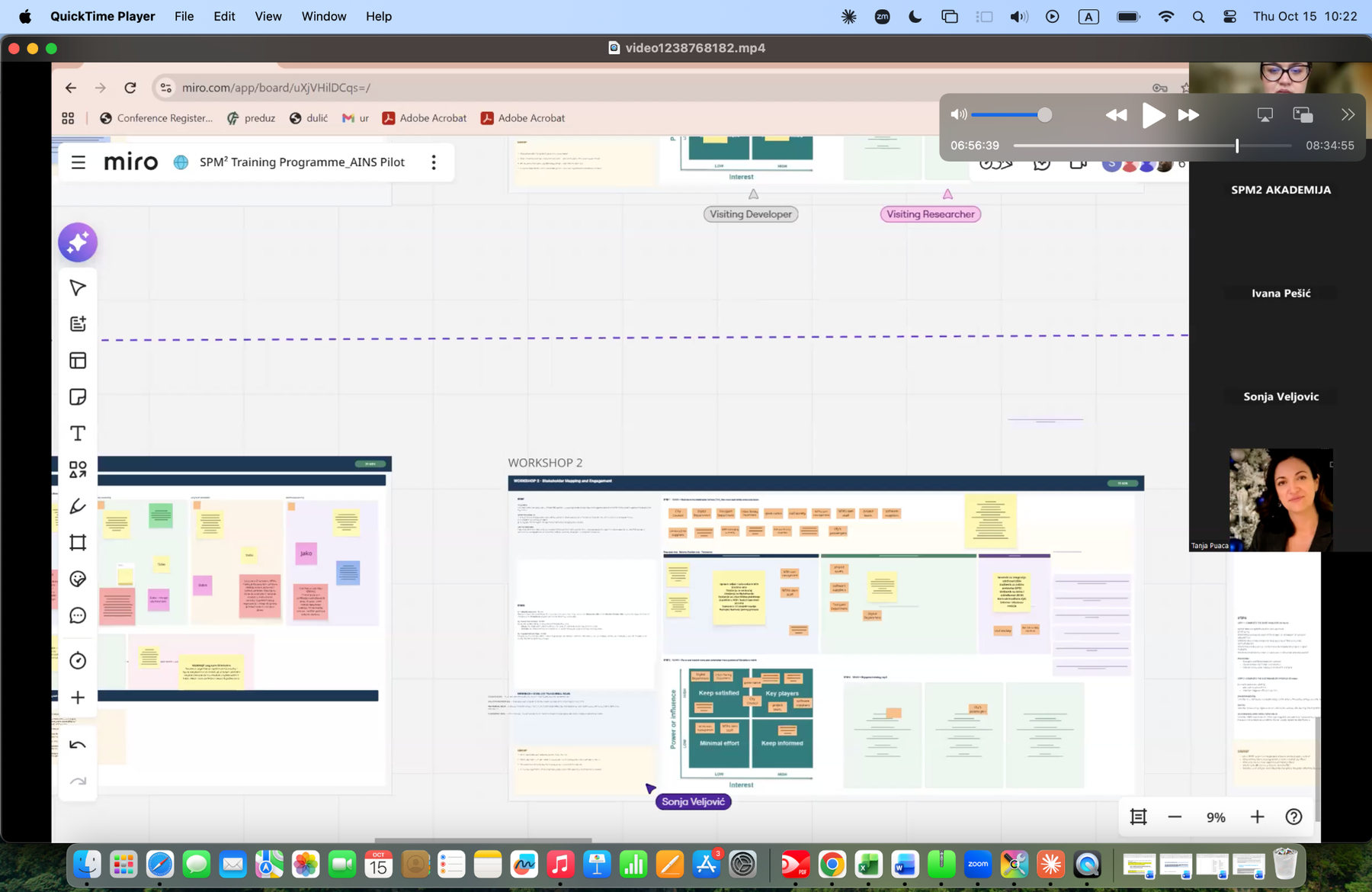
The whole training was built on the new SPM² Guide, so the pilots were also the first real test of the Guide in practice. Each pilot lasted two days, and we kept the lecture parts short. Most of the time, participants worked in teams of four or five on Miro boards, all following the same fictional project from start to finish. They went through seven workshops. They started by testing the SPM² Manifesto against projects they had run, and then moved through stakeholder mapping, the Business Case and the Project Charter, KPIs, ESG risks and deliverable acceptance. On the last afternoon, teams closed the project with an End Report, followed by an open exchange of impressions and a conversation about future.
That continuity turned out to be one of the things people valued a lot. As one participant put it: “I like how they build off from each other so that you get a snapshot of the whole lifecycle in action.”
The stakeholder and governance mapping workshop was often described as the hardest. One participant called it “the most challenging workshop, but certainly the most useful”. The risk workshop, where teams added sustainability risks to a standard risk register, was another favorite.
What we learned
The penny drops at the Miro board, not on the slides. Again and again, the real “aha” moments came when a team had to decide something: where a stakeholder sits on the governance map, which handful of KPIs earn a place in the Sustainability Management Plan, or whether a sustainability risk deserves a line in the main risk register. A short burst of theory followed straight away by hands-on work proved to be the right rhythm, and we’re keeping it. As one participant put it, it “really helped visualize what each step looks like in practice”.
A good story holds the methodology together. Because every workshop picked up where the last one left off, participants watched their own early choices come back to meet them. A stakeholder overlooked on Day 1 or a vague success criterion in the Charter had a way of resurfacing at acceptance and closure. That thread is what turned a set of templates into one living project.
The hard workshops are the ones that stick. Stakeholder and governance mapping, and building the Sustainability Management Plan, were the exercises that made teams stop, argue and rethink. They were also the ones many named as the most useful. That’s exactly where SPM² asks project managers to look beyond time, cost and scope, so a bit of healthy struggle there is a good sign.
Sustainability is often hiding in the outcomes. For some participants, the biggest shift was realising that sustainability lives less in the deliverables and more in what happens after them: the outcomes and long-term value that traditional project reports tend to skip. Seeing it written into governance, plans and acceptance criteria made it feel like part of the job rather than an extra.
Two days fly by. We packed a lot in, and participants were honest about it. The exercises deserve more breathing room, and a few minutes at the start to get everyone at home on Miro would pay off later. For the next editions we’d rather cut content than rush it.
Mixed teams are a strength, with a little support. Seasoned PM² practitioners working side by side with newcomers sparked some of the liveliest discussions. Those just starting out, though, needed more time with the roles and artefacts. A bit of extra guidance for them will help every voice in the team be heard.
What’s next
We are now going through the feedback from all three pilots and will use it to fine-tune the training materials and the SPM² Guide for the next trainings. A big thank you to everyone who spent two days with us arguing over stakeholders, risks and budgets. Several of you mentioned you’re preparing for the SPM² certificate, and we’ll be happy to see you there.
Stay Connected:
The SPM² project is creating a European community committed to advancing sustainable project management.
Follow our journey to receive updates on project results, upcoming events, new publications, educational resources and opportunities to participate in pilot activities.