Event Objectives
The Educational Programme on Sustainable Project Management for Young People was designed as a capacity-building training aimed at introducing participants to the principles, frameworks, and practical tools of sustainable and regenerative project management.
The main objectives of the event were to:
• Introduce participants to the foundations of sustainable project management and its relevance in contemporary economic, social, and environmental contexts.
• Explain the shift from traditional project management approaches toward impact-aware and value-oriented project delivery.
• Familiarise participants with the P5 model and its application in planning, analysing, and evaluating project impacts.
• Provide an overview of the PRiSM methodology, highlighting its lifecycle perspective and alignment with sustainability principles.
• Enable participants to apply sustainability concepts in practice through guided teamwork using the P5 Sustainable Project Canvas.
Illustrate how EU-funded projects can serve as practical examples of sustainability integration in project management practice.
Event Description
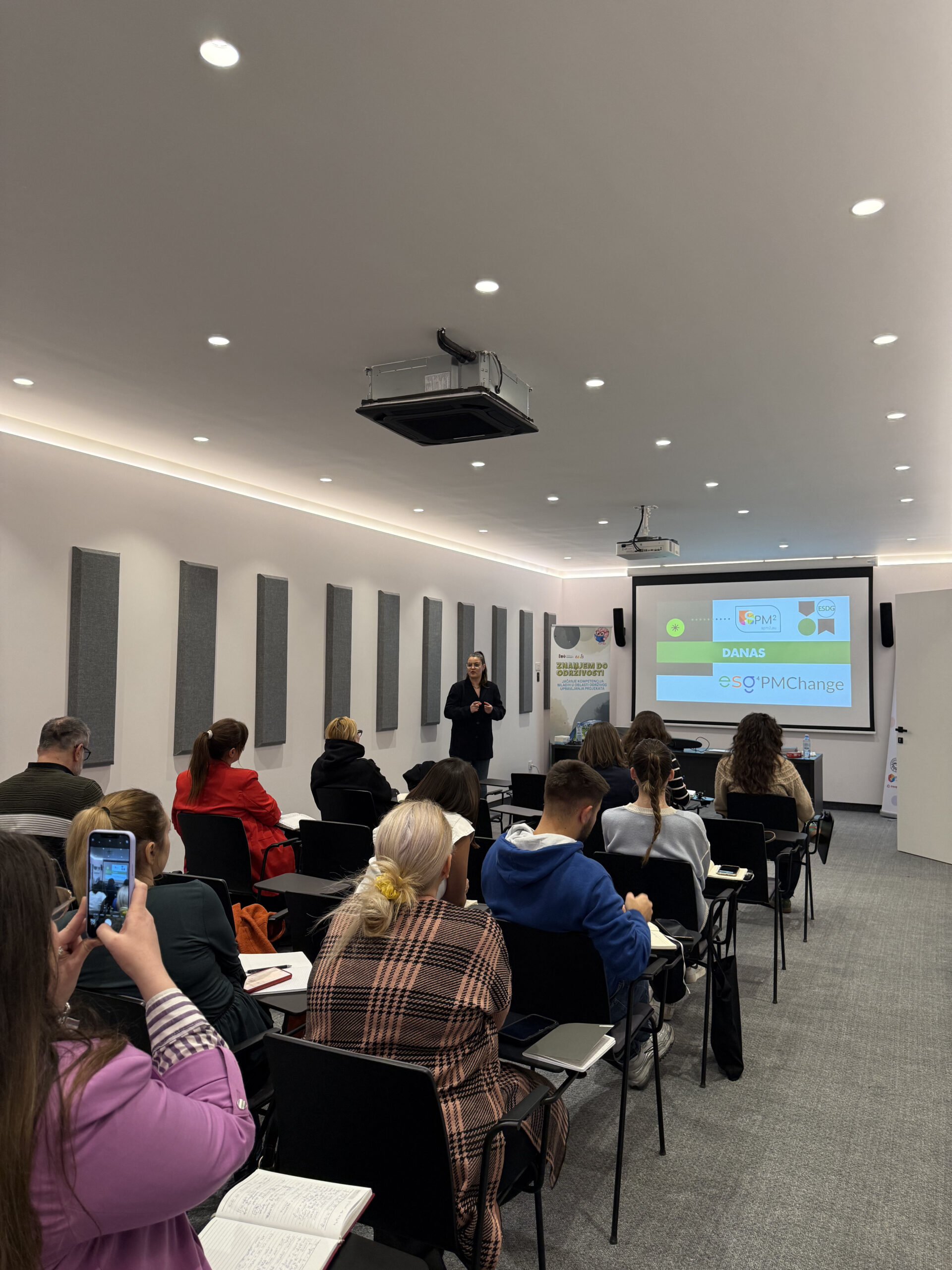
The event was delivered as part of the Educational Programme on Sustainable Project Management for Young People, implemented through a three-cycle training format. Each cycle followed the same pedagogical structure and learning objectives, allowing participants to progressively build knowledge and practical understanding of sustainable project management.
The training focused on introducing sustainability as a core project management competence, rather than an add-on or compliance requirement. It emphasised the transition from a “do no harm” logic toward value creation and regenerative sustainability, in line with contemporary approaches promoted by the Global Green Project Management (GPM) framework.
The sessions began with an introduction and orientation, outlining the objectives of the training and the importance of sustainable project management in today’s complex and uncertain environment. This was followed by a structured overview of the basic framework of sustainable projects, including global challenges, the concept of beyond do no harm, and the role of projects in generating social, economic, and environmental value.
A dedicated part of the training was devoted to the P5 model, where participants were introduced to its five dimensions—People, Planet, Prosperity, Process, and Product. The model was presented as a practical analytical tool for identifying both positive and negative project impacts and supporting informed decision-making throughout the project lifecycle.
The programme then introduced the PRiSM approach, providing an overview of its lifecycle phases, key artefacts, and its alignment with the P5 model. This segment positioned PRiSM as a structured methodology for embedding sustainability principles directly into project governance and delivery.
1. Cross-Project Clustering Session
Within the training programme, one dedicated session was explicitly designed to build on all previously introduced concepts, serving as a cross-project clustering activity. The session translated the theoretical and methodological foundations—particularly the beyond do no harm perspective, the P5 model, and the PRiSM approach—into concrete project-based practice.
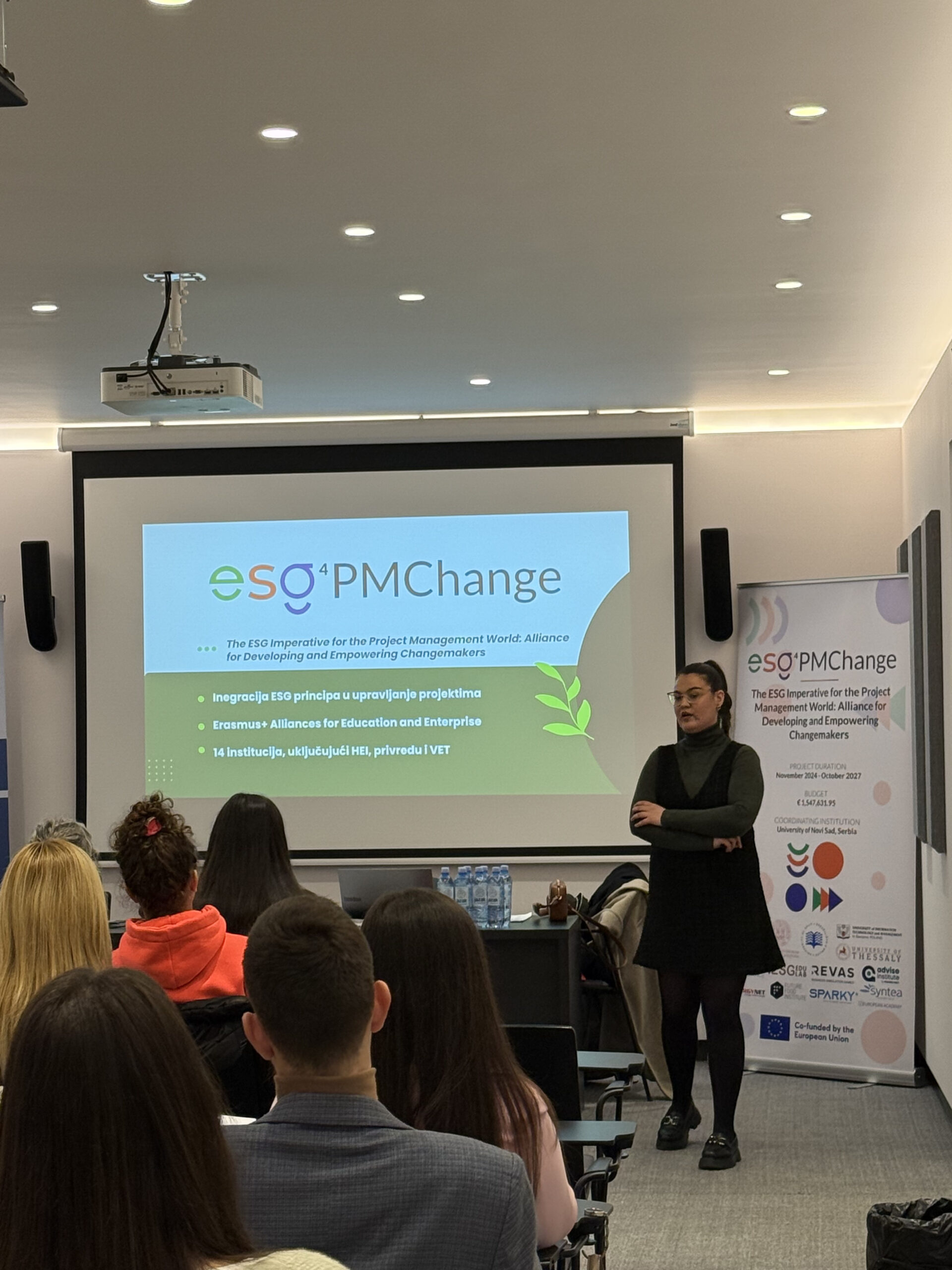
During this session, several EU-funded initiatives—ESG4PMChange, SPM2, GreenTech Horizons, and ESDG—were presented as complementary and interconnected examples of good practice. Rather than focusing on project promotion, these initiatives were used to illustrate how individuals involved in Erasmus+ projects—whether as project coordinators, team members, educators, or contributors—can actively influence sustainability and regenerative outcomes through their roles, decisions, and everyday project practices.
The session highlighted how project-based work can move beyond risk mitigation and compliance toward long-term value creation, competence development, and systemic impact, positioning EU-funded projects as practical leverage points for regenerative sustainability, in line with the logic promoted by GPM methodologies.
2. Practical Work and Reflection
Following the theoretical and illustrative sessions, participants engaged in a hands-on team activity using the P5 Sustainable Project Canvas. Working in groups, they analysed predefined project scenarios, identified key impacts, and discussed sustainability trade-offs and opportunities across the project lifecycle.
The training concluded with a reflection and discussion session, allowing participants to share insights, connect the concepts to their own professional or academic contexts, and critically reflect on the role of project management in addressing contemporary sustainability challenges.
At the end of each training cycle, participants who attended the programme were awarded certificates of participation, formally recognising their engagement in the Educational Programme on Sustainable Project Management for Young People and their active involvement in all planned learning activities.
Participant Profile
Participation in the Educational Programme on Sustainable Project Management for Young People was documented through official attendance lists for each training cycle. The recorded data confirm strong and consistent interest in the topic across different sectors, professional roles, age groups, and gender, clearly demonstrating that sustainable and regenerative project management is a topic of shared relevance across society. The diversity of participants further underlines the importance and timeliness of addressing sustainability as a core project management competence.
1. 1st Cycle – 29 November 2025
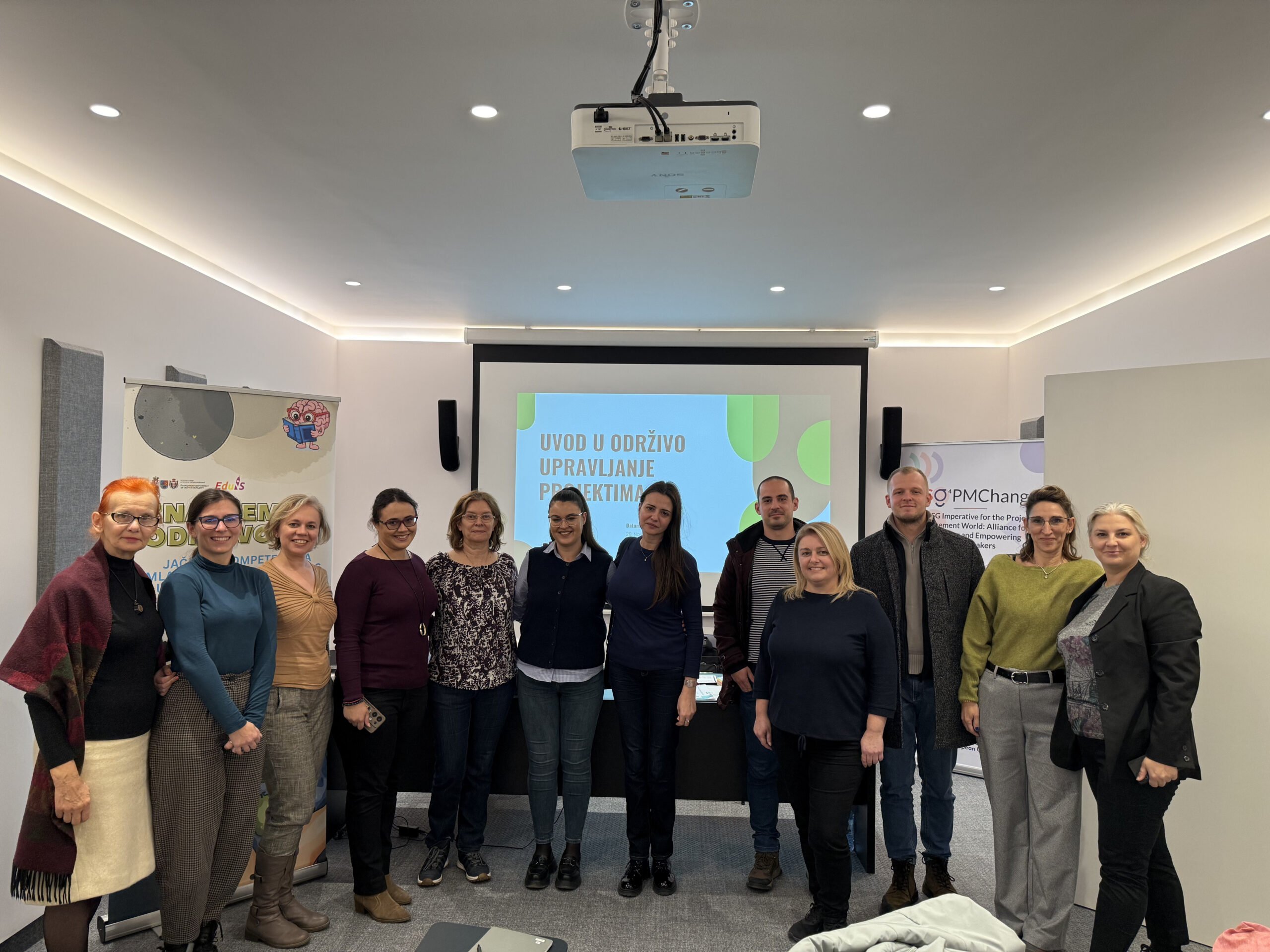
According to the signed attendance list, the first training cycle was attended by 20 participants. The participant group included higher-education students, professionals from the private and public sectors, entrepreneurs, and individuals involved in project-based and sustainability-related activities. Participants represented different age groups and levels of professional experience, enabling meaningful discussion and exchange during both theoretical and practical sessions.
2. 2nd Cycle – 11 December 2025
The attendance list for the second cycle records 19 participants. The group reflected a balanced mix of academic and non-academic backgrounds, including students, early-career professionals, experienced practitioners, educators, and individuals engaged in Erasmus+ and other EU-funded projects. Both female and male participants were represented, contributing to inclusive dialogue and interactive group work.
3. 3rd Cycle – 18 December 2025
The third training cycle gathered 19 participants, as confirmed by the official attendance records. The participant profile again demonstrated strong diversity in terms of age, professional experience, and sectoral affiliation, including students, professionals, entrepreneurs, and project team members. This diversity supported active participation, peer learning, and the exchange of perspectives across different professional roles.
Overall Participation Overview
Across all three cycles, the programme engaged a total of 58 participants. The consistently diverse participation confirms that interest in sustainable and regenerative project management originates from all societal spheres, including education, industry, public administration, entrepreneurship, and civil society. This diversity validates the need for educational programmes that address sustainability and regenerative value creation as core competences for contemporary project roles, particularly within the context of Erasmus+ and EU-funded initiatives.
Feedback and Observations
Participants expressed high satisfaction with the training experience, highlighting the opportunity for networking and exchange as a key outcome. By the end of the sessions, participants had established new professional contacts, connected with members of the organising team on LinkedIn, and expressed interest in being invited to future trainings of a similar format. The overall atmosphere was described as engaging, interactive, and enjoyable, contributing to active participation throughout the programme.
Dissemination and Visibility
Dissemination activities were primarily carried out through the official Instagram profile of the programme. Communication included short, engaging posts published two to three times per week, featuring sustainability-related insights and project management topics, as well as calls for participation for each training cycle.
Following the completion of each cycle, video materials in the form of reels were published, capturing key moments and impressions from the sessions. In addition, Instagram stories were used to reshare content posted by participants, serving as authentic and positive feedback on the event and further extending its reach through participant networks.
Dissemination was further supported through LinkedIn, where participants shared posts, photos, and reflections related to the training, expressing satisfaction with the programme and contributing to increased visibility within professional and academic networks.