
By Agustín Moya-Colorado, Member of the Board of Directors, PM² Alliance
(This article is part of the SPM² Project, co-funded by the Erasmus+ Programme of the European Union.)
When sustainability is discussed in project management, conversations often revolve around ambitious objectives and transformation. We talk about reducing environmental impacts, promoting social inclusion, strengthening resilience, or contributing to the Sustainable Development Goals. These aspirations are not only worthwhile; they are increasingly becoming an essential part of how projects are conceived and evaluated. Yet experience tells us that good intentions alone rarely produce sustainable results.
Many projects begin with inspiring visions and carefully articulated sustainability commitments. Sustainability appears prominently in funding proposals, project charters and communication materials. However, as projects progress, competing priorities emerge. Deadlines become tighter, budgets come under pressure, risks materialise and difficult decisions need to be made. At that point, sustainability often becomes one objective among many, and sometimes the first one to be compromised.
This raises an important question: what determines whether sustainability remains a guiding principle throughout the life of a project, rather than an aspiration expressed only at its beginning? The answer lies in governance.
Too often, governance is perceived as an administrative necessity: committees, reporting lines, decision-making bodies or approval procedures. These elements are certainly part of governance, but they do not capture its true purpose. At its heart, governance is about ensuring that projects consistently make decisions that remain aligned with their strategic objectives and intended benefits. It provides the framework through which priorities are balanced, trade-offs are evaluated and accountability is exercised. From this perspective, governance becomes one of the most powerful enablers of sustainability.
Every project faces moments where competing interests collide. Delivering quickly may conflict with ensuring adequate stakeholder participation. Reducing costs may affect environmental performance. Meeting immediate expectations may compromise long-term organisational benefits. These situations rarely have perfect solutions, and sustainability cannot rely solely on the personal commitment of individual project managers to navigate them.
Instead, projects require governance structures capable of making these decisions consciously, transparently and consistently.
This is one of the distinguishing features of SPM². Rather than considering governance as a peripheral function, SPM² places it at the very centre of the methodology. The Project Owner, the Project Steering Committee, the Business Manager and the Project Manager each contribute distinct perspectives to project decision-making. Together, they help ensure that projects do not simply deliver outputs, but continue to pursue the business objectives and benefits that originally justified their existence. Seen through a sustainability lens, these governance roles acquire an even broader significance.
- The Project Owner safeguards the strategic vision and ensures that sustainability ambitions remain aligned with organisational priorities.
- The Business Manager helps maintain focus on benefits realisation and organisational adoption, recognising that sustainable impact depends not only on successful delivery but also on lasting organisational change.
- The Project Steering Committee provides the forum where competing priorities can be openly discussed, ensuring that decisions consider not only short-term efficiency but also longer-term environmental, social and economic consequences.
- Meanwhile, the Project Manager creates the conditions for these governance decisions to be translated into effective project execution, facilitating dialogue, managing information and supporting informed decision-making throughout the project lifecycle.
In this sense, governance is not simply about controlling projects. It is about creating the conditions for responsible decision-making.
This perspective also reflects one of the central ideas underpinning the SPM² Project. Sustainability should not be understood as an additional work package, a reporting requirement or a final evaluation criterion. It should become an integral consideration within the governance of projects themselves. Every major project decision—whether related to scope, quality, procurement, stakeholder engagement, risks or organisational change—has implications for sustainability. Governance provides the mechanism through which these implications can be identified, discussed and addressed before they become problems.
Perhaps one of the greatest contributions that sustainable project management can make is to shift our attention away from sustainability as an outcome and towards sustainability as a way of making decisions.
Projects rarely fail because people disagree with sustainability. More often, they struggle because sustainability is gradually overshadowed by more immediate concerns. Good governance helps prevent this from happening. It provides continuity when priorities compete, consistency when pressures increase, and accountability when difficult choices must be made.
Ultimately, sustainable projects are not defined solely by the objectives they pursue, but by the decisions they make every day. Governance is what transforms sustainability from a statement of intent into a practical discipline that shapes behaviours, priorities and outcomes throughout the entire project lifecycle.
Because sustainable impact does not emerge from good intentions alone. It emerges from good decisions. And good decisions require good governance.
About the Author
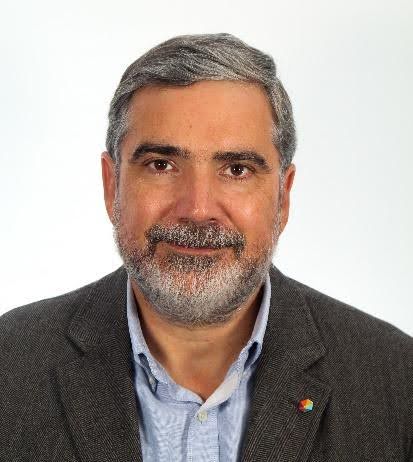
Agustín Moya Colorado is a member of the Board of Directors of the PM² Alliance, contributing to the advancement of sustainable and effective project management practices across Europe.
He is an agricultural engineer by training with post-graduate studies in Project Cycle Management in Development Cooperation and certifications in PM² by the European Commission and the PM²Alliance. In his over 20 years of professional experience, he has worked with civil society organizations, public administrations (mainly the EC), and private companies; in numerous projects in different contexts and countries. This blend of experience allows him to understand the perspectives, needs and constraints of the different stakeholders in designing, planning and implementing projects.
(This article was written within the framework of the SPM² Project, co-funded by the Erasmus+ Programme of the European Union.)